A potential client reaching out is a valuable opportunity, but many service businesses lose momentum after the first message is received. The gap between someone showing interest and becoming a paying customer is often where communication breaks down, follow-up becomes inconsistent, and opportunities quietly disappear.
The issue is rarely a lack of demand. Many businesses already have people interested in their services. The challenge is having a reliable process that turns those inquiries into meaningful conversations and completed bookings.
The Part of the Customer Journey Businesses Often Overlook
Most businesses focus heavily on attracting new leads. They invest in marketing, referrals, advertisements, and online visibility to encourage people to reach out.
However, the customer experience does not begin when someone books a service. It begins the moment they decide to make contact.
An inquiry is a signal of interest, but it is also a moment when potential customers are evaluating the business.
They are considering:
A four-panel business guide highlights responsiveness, understanding, organization, and trust as key client concerns.
A fast response can create a positive first impression, but the entire experience afterward determines whether that interest continues.
Why Interested Customers Sometimes Disappear
When inquiries do not turn into bookings, businesses often assume they need more leads.
In many cases, the problem is not the number of opportunities coming in. It is what happens after those opportunities arrive.
Service business owners frequently manage two responsibilities at once: delivering excellent work for existing clients and trying to maintain communication with future clients.
A business owner may be handling projects, answering questions, preparing proposals, managing schedules, and responding to new inquiries all in the same day.
Without a structured process, follow-up depends on availability and memory.
This creates situations where:
A message receives a delayed response
A quote is sent but never followed up on
Important customer details are difficult to locate
A prospect is unsure what happens next
Over time, these small gaps create a larger revenue problem.
The Cost of Losing Momentum After an Inquiry
The space between inquiry and booking is where trust is either strengthened or weakened.
Research from Harvard Business Review found that companies that responded quickly to online leads had a significantly higher chance of connecting with potential customers compared with companies that waited longer.
However, response time is only one part of the process.
A customer may receive a quick reply but still move on if communication feels unclear, inconsistent, or difficult to navigate.
Modern customers expect businesses to provide connected and consistent experiences across interactions. Salesforce research highlights that customers increasingly value businesses that understand their needs and provide personalized experiences throughout the relationship.
How Virtual Assistant Support Helps Close the Gap
A virtual assistant can help service businesses strengthen the operational foundation behind client conversion.
The role is not simply answering messages. It is maintaining the systems that allow businesses to provide consistent customer experiences.
Support may include:
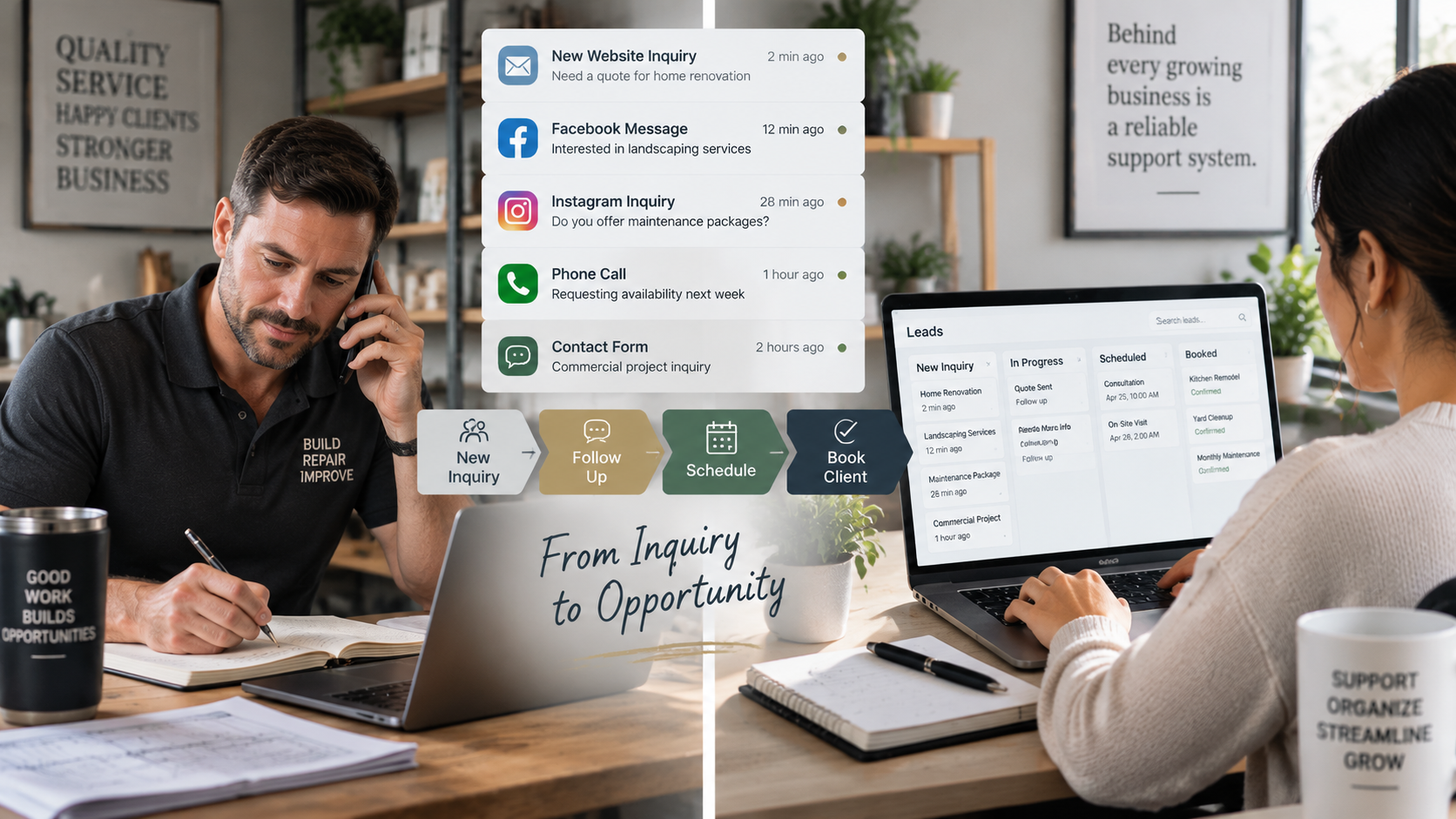
Organizing inquiry pipelines
Updating CRM records
Tracking follow-up activities
Coordinating appointments
Preparing client communication
Maintaining workflow accuracy
Research from McKinsey & Company emphasizes that strong customer journeys depend on connected processes and consistent experiences rather than isolated interactions.
By supporting these operational systems, a virtual assistant helps business owners protect their time while ensuring potential clients continue receiving attention frequently. The goal is making sure meaningful conversations do not disappear.
Growth Depends on What Happens After Someone Reaches Out
Generating interest is only one part of business growth. The ability to manage that interest determines how many opportunities become actual clients.
A strong inquiry-to-booking system creates consistency, improves customer experience, and reduces the chance that valuable opportunities disappear.
The goal is not to automate every interaction. It is to create a structure that allows businesses to respond thoughtfully while focusing on the work that requires their expertise.
With the right systems and operational support, businesses can capture more opportunities without adding unnecessary complexity.



Leave a Reply